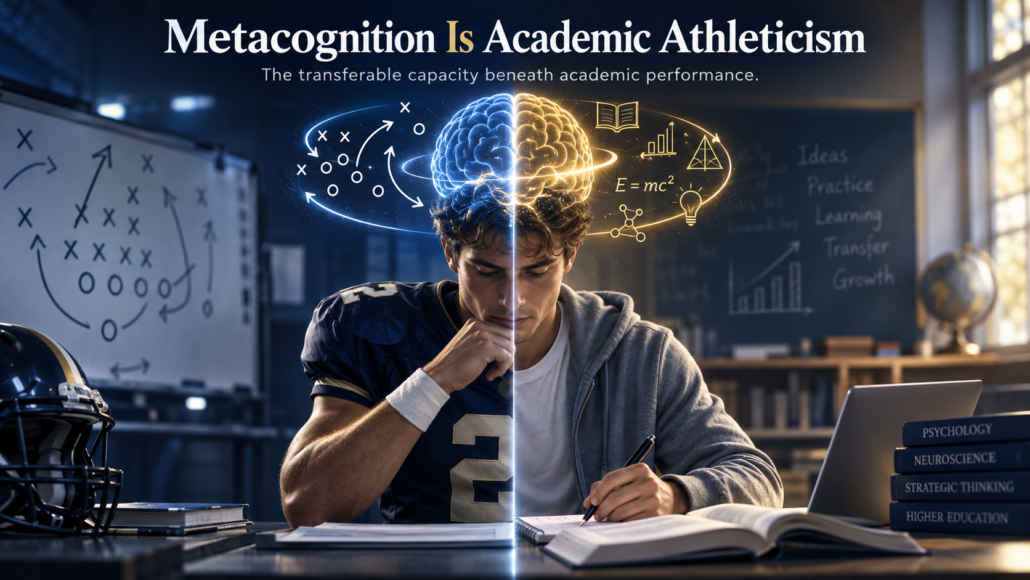
Metacognition is Academic Athleticism
What college football can teach us about learning in athletics and academics
Metacognition is to academics what athleticism is to sports. Both govern how effectively a performer learns, adjusts, and thrives within demanding environments.
I got to test this assertion more than fifteen years ago.
In 2010, I launched a study hall program for student-athletes at Lenoir-Rhyne University, in Hickory, NC. Tensions between faculty and athletic coaches were so high that the Provost and Vice President of Athletics asked me to overhaul the existing academic support model.
My student leaders and I developed a metacognitive-based model that identified ways players of all sports could transfer the complex thinking and learning they routinely used in their sport to their academics.
- In 2011, the student-athletes skyrocketed to the top of the conference academic honor roll, with football doubling the number of players who made the 3.2 minimum GPA.
- By 2013, the student-athlete GPA surpassed the general student GPA.
- By 2014, faculty were presenting at conferences on the joys of teaching student-athletes.
- By 2015, several athletic teams had won national academic honors and recognitions, and colleges and universities began visiting the institution to learn about the program.
During this era, the university experienced unprecedented academic and athletic success—capturing national championships, contending for titles, and securing several conference first-place rankings. It was a rare cultural transformation that not only improved grades but also birthed new perspectives. I was honored to help lead it.
In 2015, I transitioned from the institution to bring this metacognitive model to other colleges and universities, where the approach has produced similar transformative results.
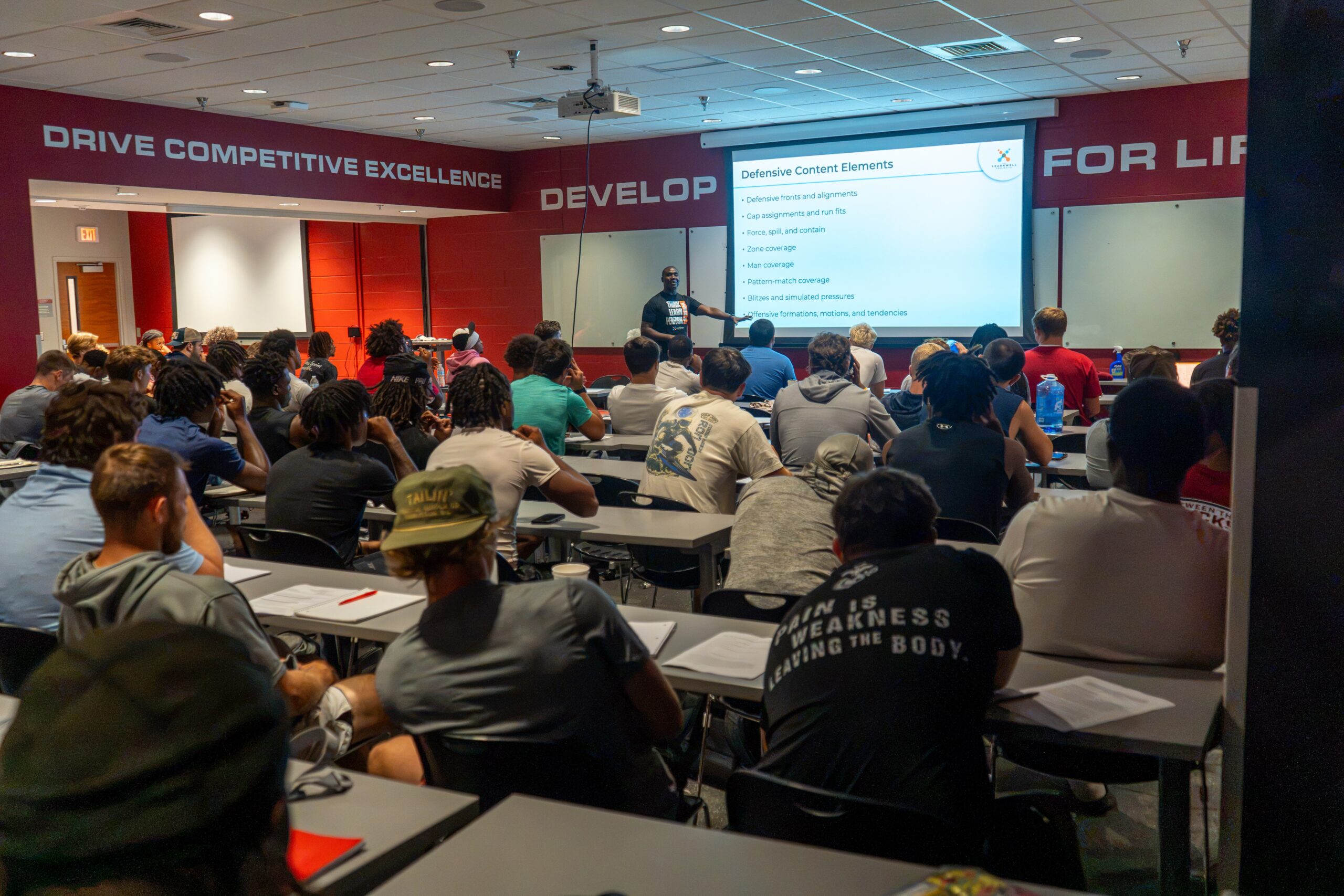
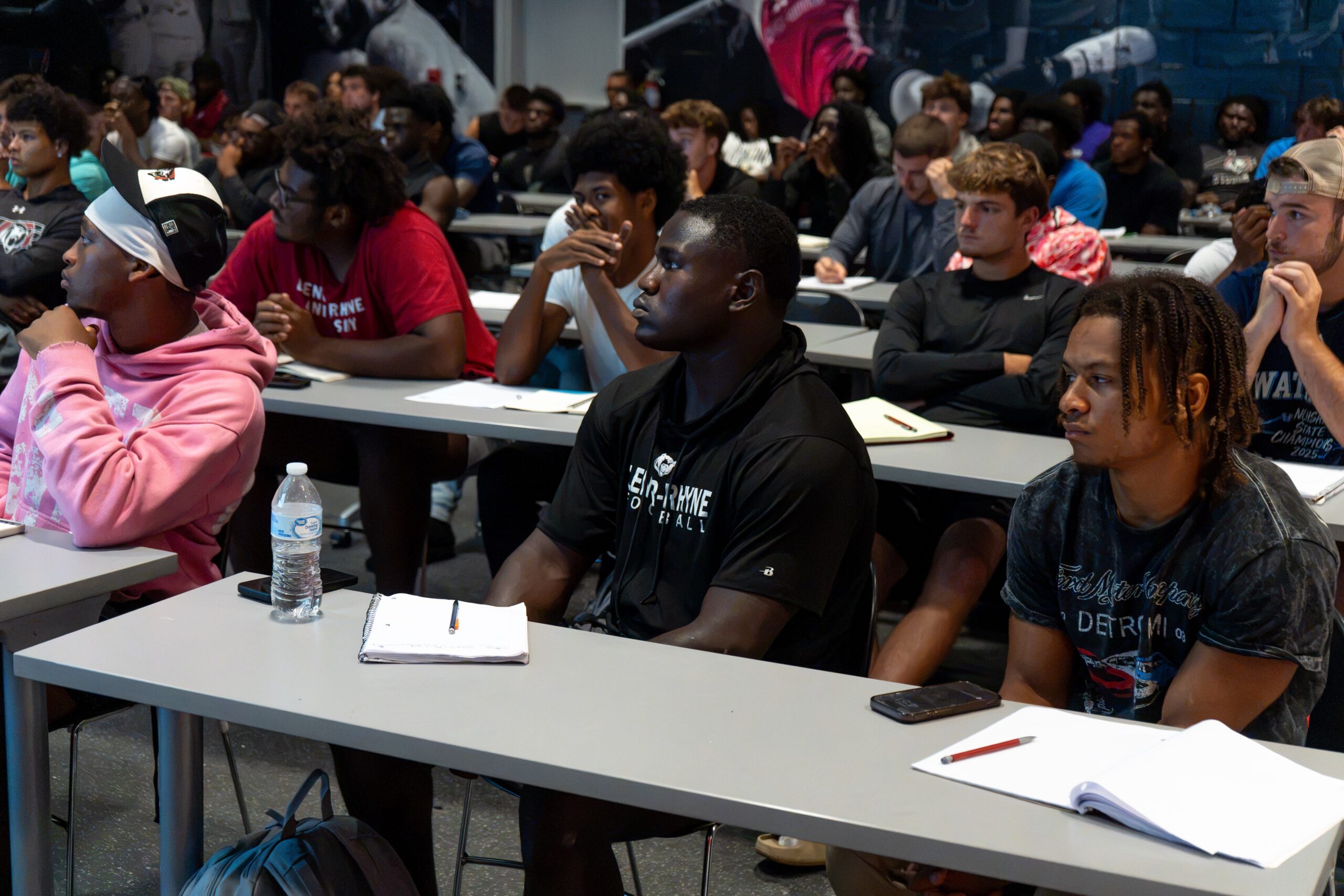
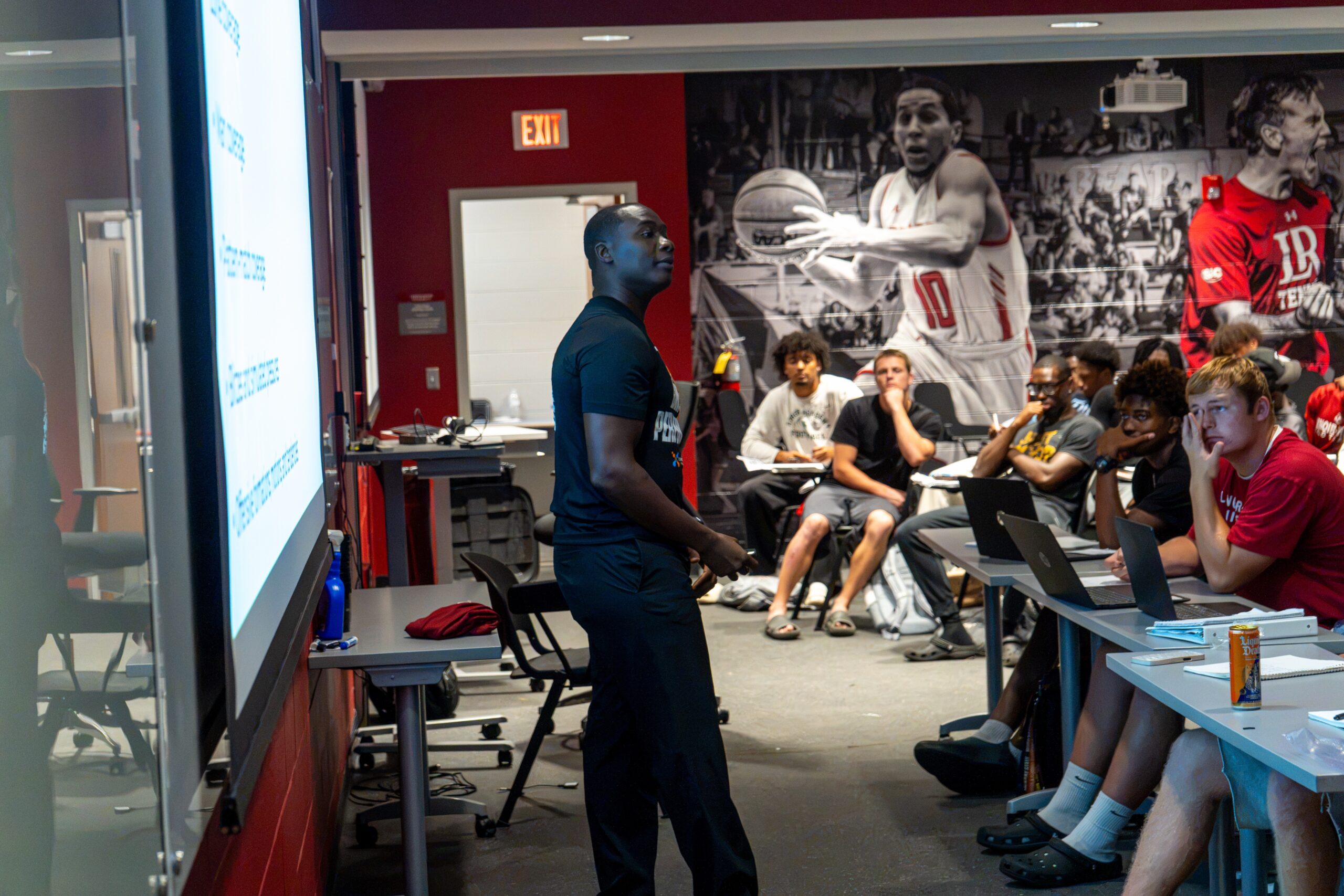
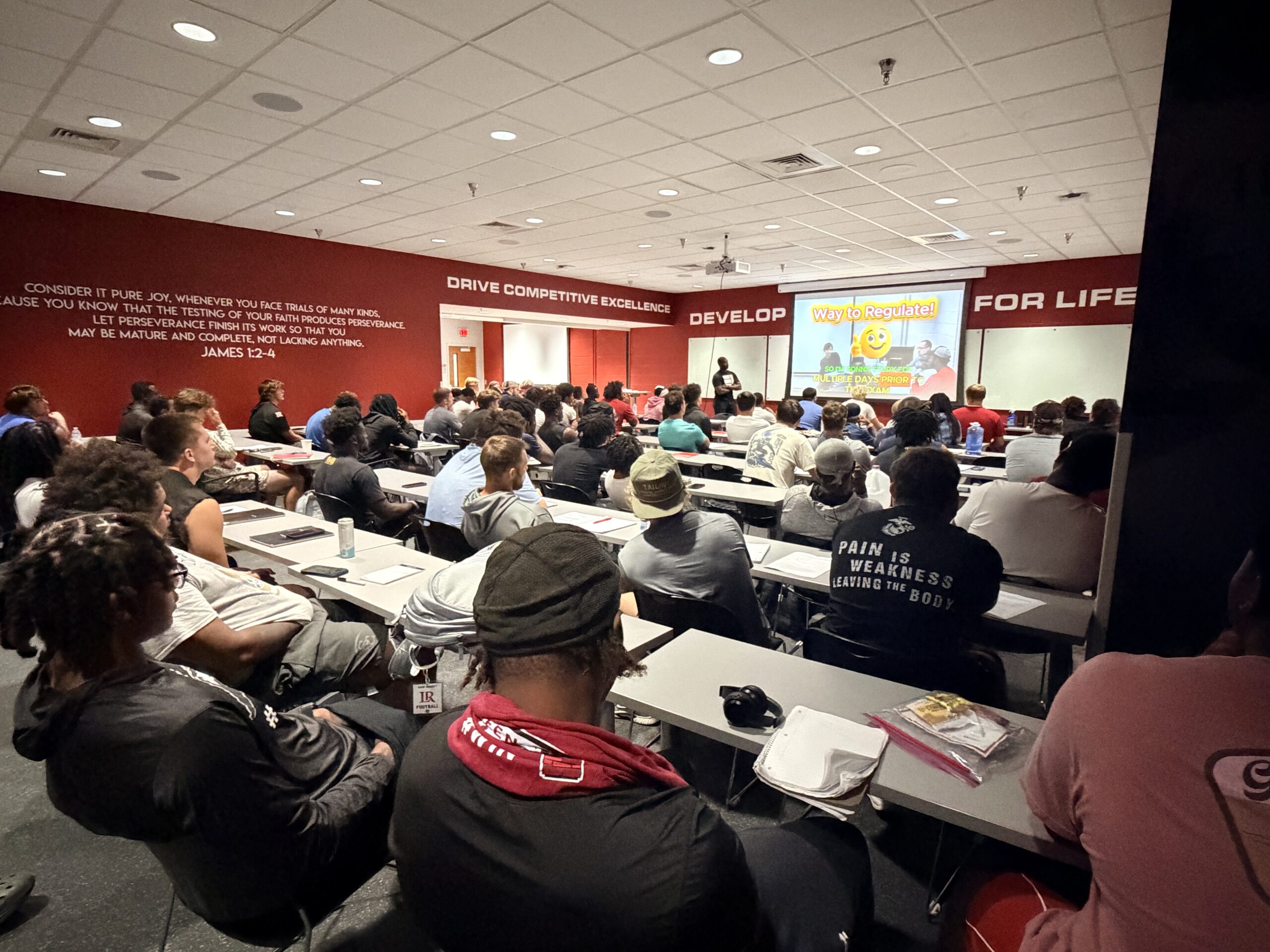
Well, football is back, and I just met with my alma mater’s football team. I asked these players the same thing I asked the team fifteen years ago: to think about something they probably don’t hear very often: football may be one of the most intellectually demanding things they do in college.
Think about this: one of the first resources a college football player receives is a playbook. That playbook contains concepts, schemes, formations, terminology, and plays. The player has to learn that information, understand how the pieces fit together, recognize formations, remember assignments, and know when particular concepts and plays apply.
Practice adds another layer. Players have to communicate what they know, anticipate what is coming, diagnose what is actually happening, select an appropriate response, and execute it—often in a matter of seconds. By game day, they are performing all of this against opponents who have spent the week studying their tendencies and deliberately developing ways to confuse, overwhelm, and exploit them.
The learning cycle continues after the final whistle. Players review film, identify what went right and wrong, and try to make an accurate attribution about why. Was the problem a missed read, poor technique, a bad decision, or a misunderstanding of the concept? Their judgment matters because what they learn from that review has to alter what they notice and do the next time.
There is something else interesting about this work: much of it is performed in the open. Successes, errors, decisions, and missed assignments can be seen by coaches, teammates, spectators, and anyone watching on television onr online. A player’s understanding is not merely reported; it is repeatedly exposed through performance.
Put that beside the typical academic environment and the comparison gets interesting. In organic chemistry, the molecule isn’t disguising its intentions. In calculus, the derivative didn’t spend the week watching film on you, and your history professor isn’t changing the question at the line of scrimmage because she noticed a weakness in your coverage. In a technical course, the electrical circuit isn’t deliberately rewiring itself to exploit your misunderstanding, and the CNC machine isn’t studying your tendencies before you approach it.
In fact, the professor is on your team.
So I told the players, If you can learn football at this level, you should be A students in college.
Look at what they are learning
The comparison becomes easier to see when we look at the artifacts of learning and how players interact with these items.
Football starts with concepts. The unseen ideas are the hidden infrastructure of the sport.
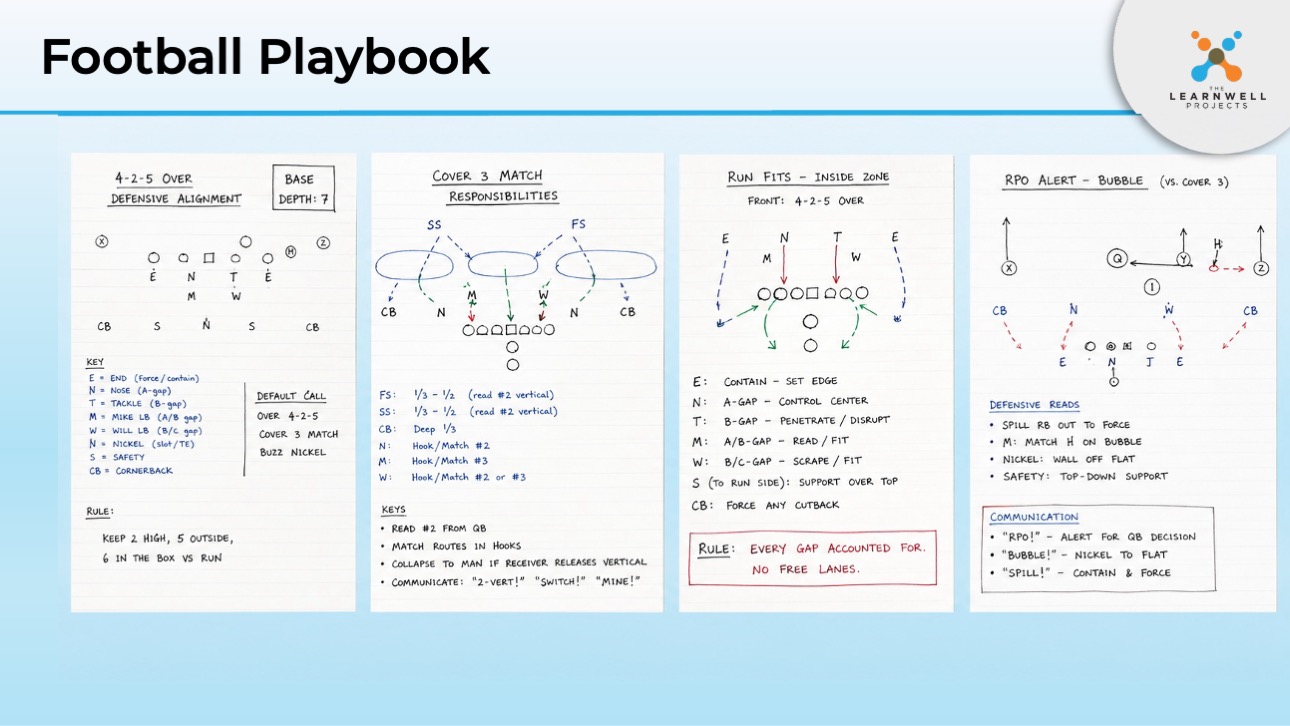
These concepts are then communicated through various forms of content, as illustrated in the slide below.
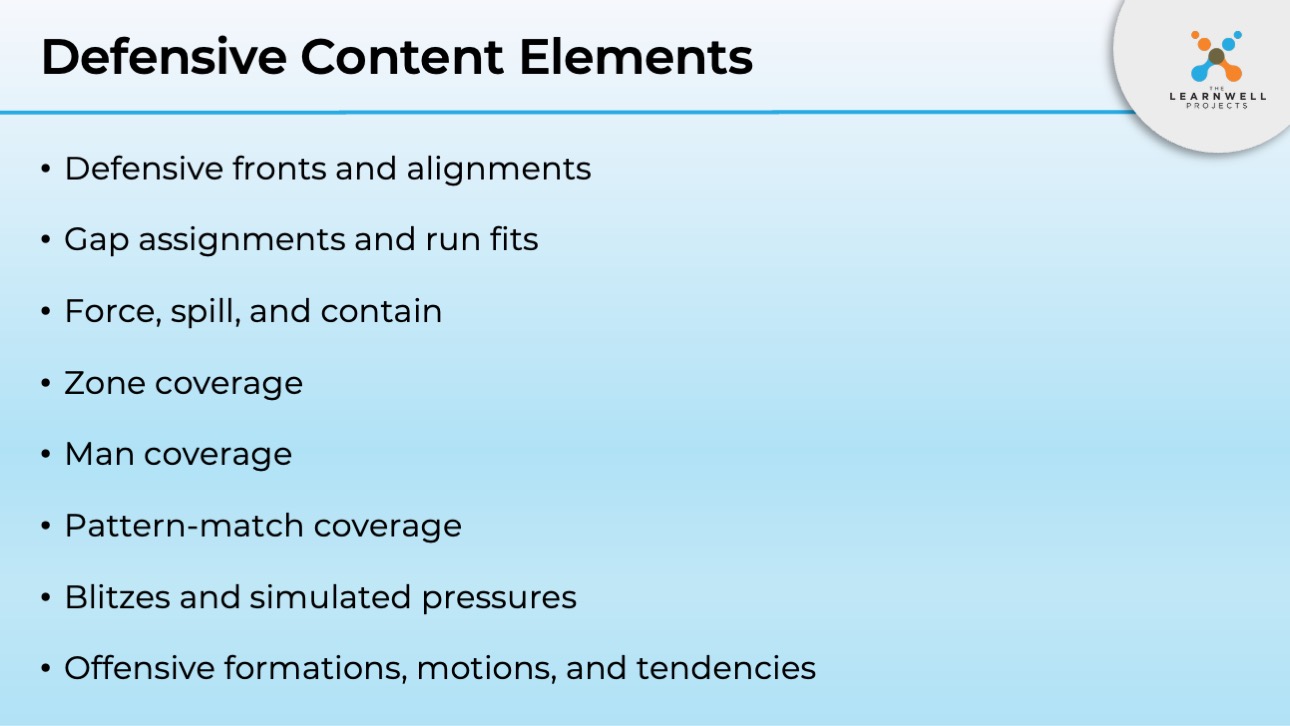
Football learning requires players to organize terminology, concepts, assignments, cues, and changing conditions into usable performance.
Now put those pages beside academic study notes.
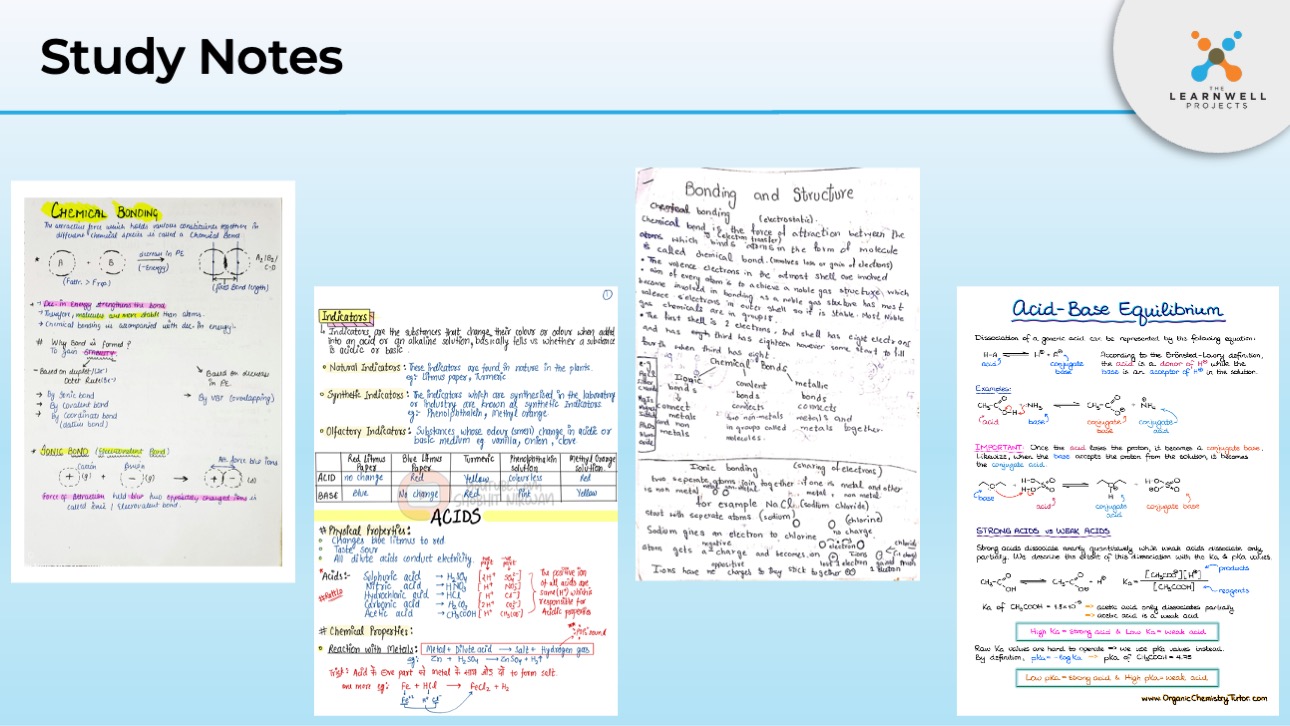
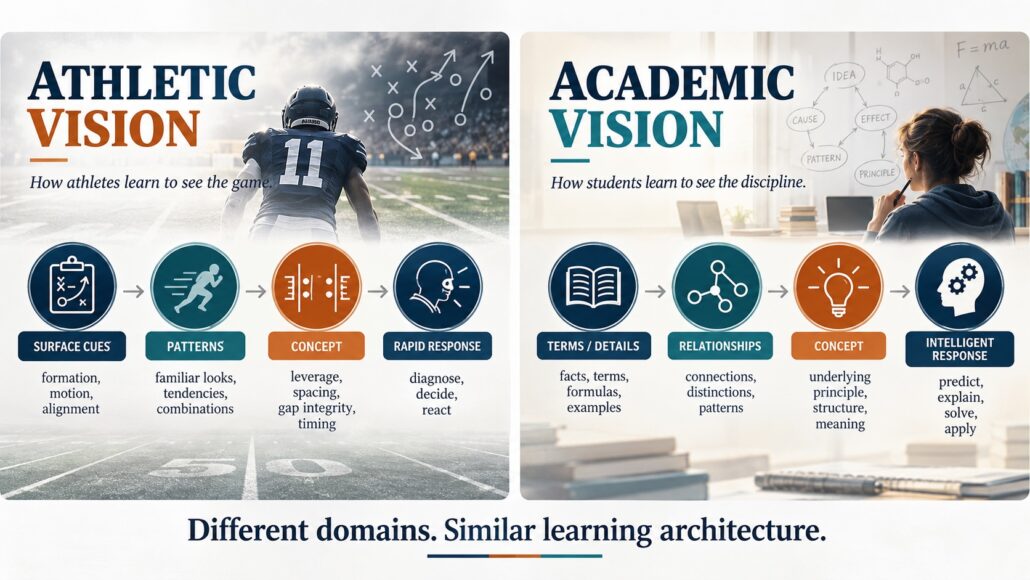
The subject matter is different, but both learners are trying to convert dense specialized knowledge into something they can recognize, retrieve, connect, and use.
The point is not that football and chemistry are intellectually identical. They obviously are not. What interests me is the similarity in the work the learner has to perform: determining what matters, organizing information, establishing the right relationships, recognizing patterns, connecting concepts, retrieving knowledge when needed, and using it under conditions that do not always look exactly like practice.
That helps explain why three characteristics of athletic learning deserve our attention. Football players routinely learn complex systems; they practice in ways increasingly designed to resemble eventual performance; and they continuously monitor results and adjust. Research on self-regulated learning in sport has likewise identified planning, strategy selection, monitoring, attribution, reflection, and adaptation as important parts of developing expertise.
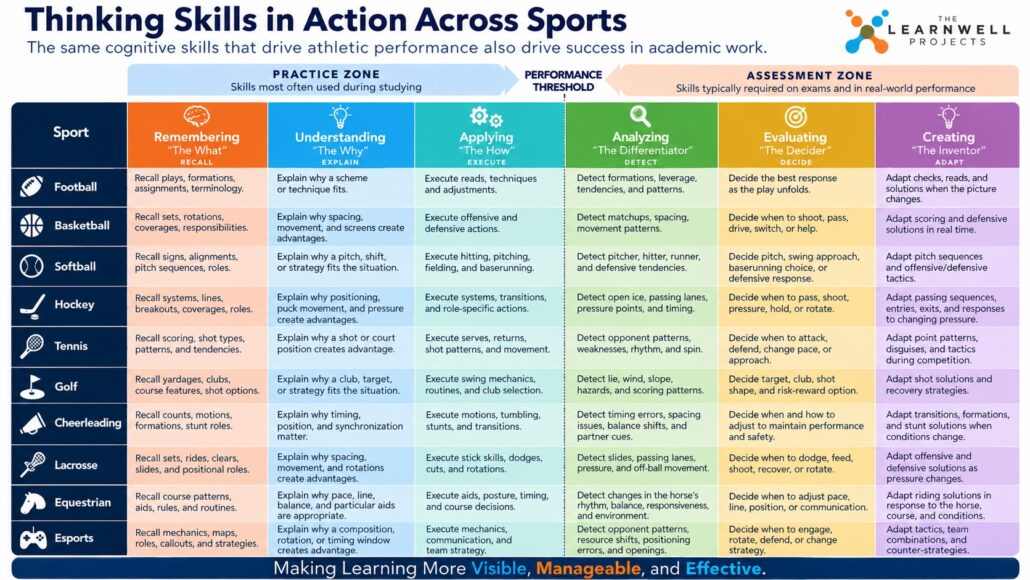
From “What?” to “Why?” to “How?”
More than a decade ago, Patricia Alexander’s Model of Domain Learning gave me a useful way of thinking about this progression. Her model describes development from acclimation toward competence and ultimately proficiency in a domain. What caught my attention then was how easily that progression could be observed on a football field.
A beginning player spends enormous cognitive energy on what: Where do I line up? What is the call? Which gap is mine? As competence develops, the questions increasingly become about why: Why does my leverage matter? Why are we forcing the ball here? Why does my assignment change when the formation changes?
Eventually, sophisticated performance demands how: How do I use what I understand when the offense gives me something I have not practiced in exactly this form? At that point, the player is no longer simply retrieving an instruction. He is recognizing, interpreting, judging, adapting, and executing.
Coaches often describe the resulting player as someone who has begun to play faster. Some of that improvement is physical, but most of it is cognitive. The player who can quickly analyze and evaluate information will play faster and better, partciularly in key situations.
The underlying capacity
That brings me to the idea I have been thinking about since meeting with that team.
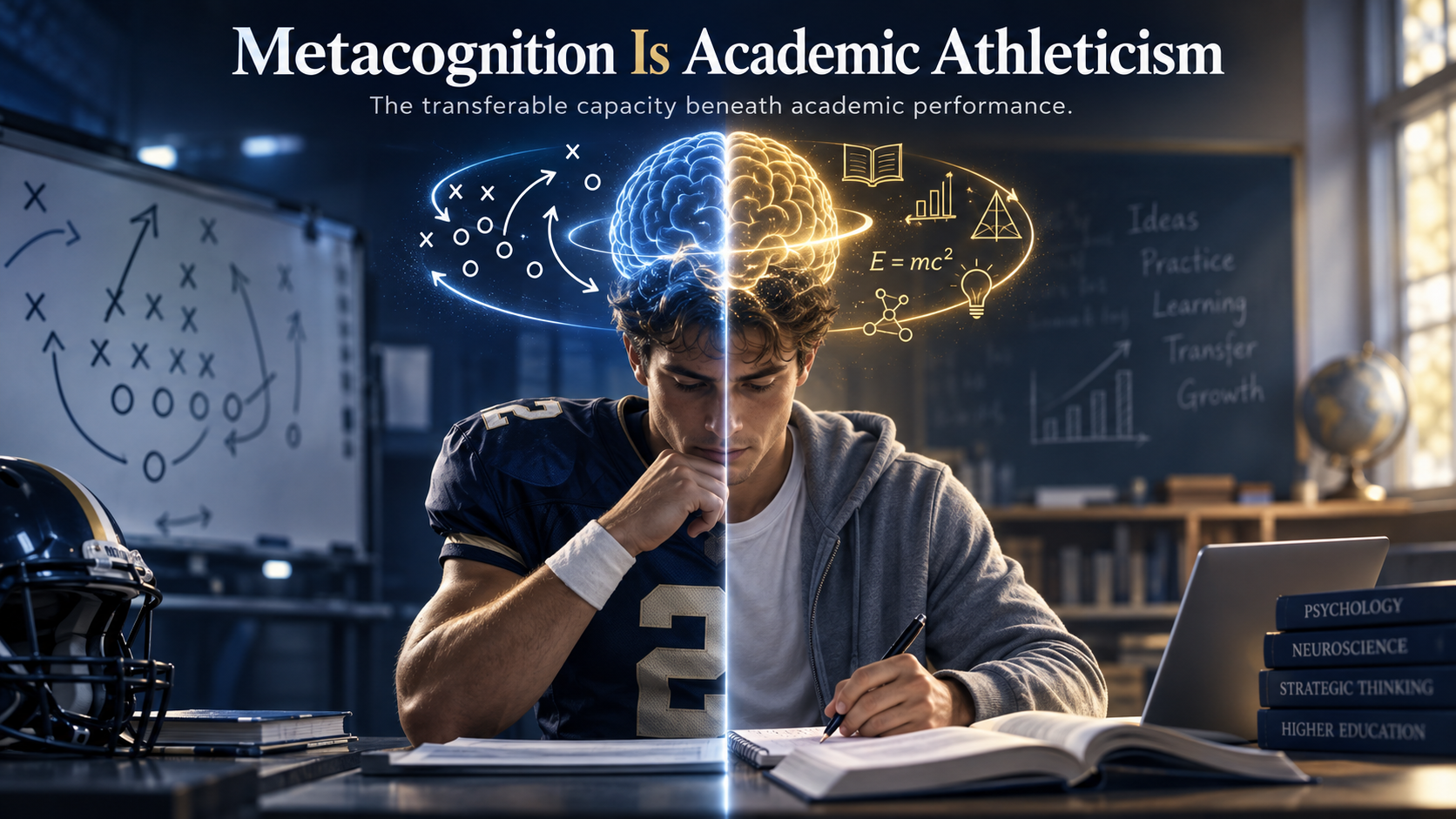
Athleticism supports specialized performance across sports. Metacognition can play a comparable role across academic domains.
Athleticism is not football. It is not basketball, volleyball, soccer, baseball, or swimming. It is a collection of underlying capacities—coordination, balance, agility, speed, reaction, body awareness—that can make learning and performing specialized athletic tasks more manageable.
Metacognition is not organic chemistry, calculus, history, engineering, or writing either. It involves knowledge and regulation of one’s own cognitive activity: understanding the task, planning an approach, monitoring whether that approach is working, and adjusting when needed. Research has consistently correlated metacognitive skills with academic achievement, reinforcing the importance of this underlying learning capacity.
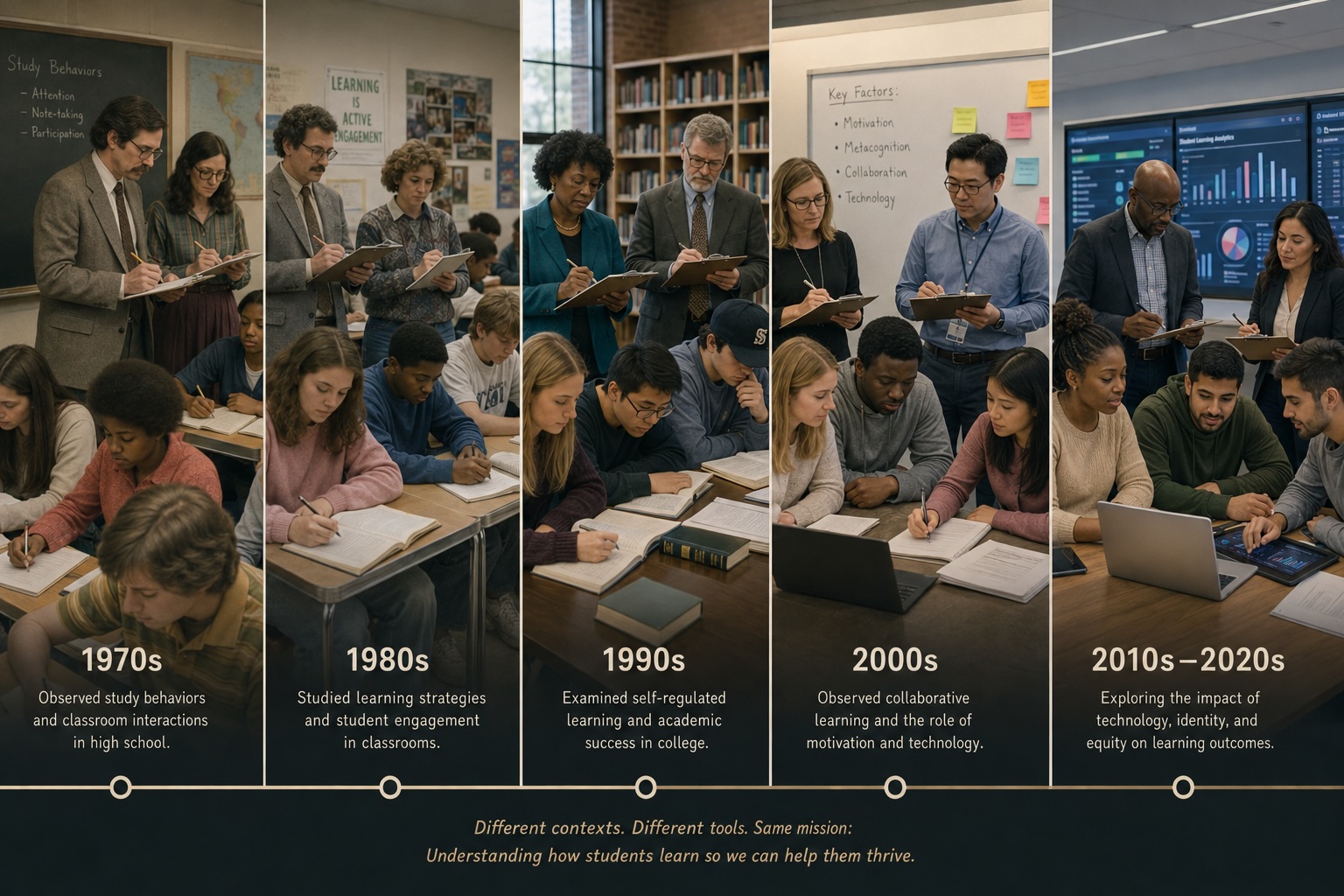
The analogy has an important limit. Athleticism does not remove the need to learn football, and metacognition does not remove the need to learn chemistry. An exceptional athlete still needs sport-specific knowledge and practice; a highly metacognitive learner still needs disciplinary knowledge, concepts, and techniques.
But both provide resources for learning, regulating, adapting, and performing within specialized environments.
Metacognition is academic athleticism.
And that leaves us with a question that may be more interesting than asking why a particular athlete is struggling academically: If this sophisticated learner is clearly present on the field, why doesn’t that learner always appear in the classroom?
Between 2010 and 2015, we answered that question at Lenoir-Rhyne. Each semester, when surveyed on whether their new metacognitive tools and skills helped in the classroom and in their sport, an overwhelming majority confirmed they did.
And that is where your part begins. You don’t need a survey; start with a question.
Start the Conversation
With a student-athlete: Think of something in your sport that used to feel complicated but now feels almost automatic. What changed in the way you understand it—not just in how many times you practiced it?
With someone supporting student-athletes: When an athlete struggles academically, how often do our conversations begin with what the student cannot do rather than investigating the sophisticated learning processes the student already uses elsewhere?
With athletic coaches: How much of your team’s success or failure comes down to mental errors and missed assignments, rather than physical limitations?
Bibliography
Alexander, P. A. (2003). The development of expertise: The journey from acclimation to proficiency. Educational Researcher, 32(8), 10–14. doi:10.3102/0013189X032008010.
Cleary, T. J., & Zimmerman, B. J. (2001). Self-regulation differences during athletic practice by experts, non-experts, and novices. Journal of Applied Sport Psychology, 13(2), 185–206. doi:10.1080/104132001753149883.
McCardle, L., Young, B. W., & Baker, J. (2019). Self-regulated learning and expertise development in sport: Current status, challenges, and future opportunities. International Review of Sport and Exercise Psychology, 12(1), 112–138. doi:10.1080/1750984X.2017.1381141.
Veenman, M. V. J., Van Hout-Wolters, B. H. A. M., & Afflerbach, P. (2006). Metacognition and learning: Conceptual and methodological considerations. Metacognition and Learning, 1, 3–14. doi:10.1007/s11409-006-6893-0.
Click here to continue to Part II: The Playbook and the Textbook.

15 comments
Allen Williams
This is a topic I’m very interested in now that I’m working and teaching at a school where athletics are such a priority. I would really like to learn how to better teach academic “athleticism” (problem solving, metacognition, deep analysis) to student-athletes. They have such a deep understanding of applying these ways of thinking to the field or court, but transcribing the same ways of thinking to the classroom seems to be a real challenge. I would like to learn analogies or metaphors to help student-athletes translate their skills to the academic environment. Even if they think of themselves as “athlete-students” instead of “student-athletes” the ways of thinking and the methods are still present!
Leonard Geddes
Hi Allen,
Thanks for your contribution here. I like that you requested metaphors. So many people want practices to use with students. However, since learning is abstract, metaphors are often needed to help students connect the visible actions of academic work with the invisible process or learning. You will get both in the session.
See you on October 13th.
Suzanne Holstein
I’ve worked with young adults and adolescents for quite a while, but this is my first experience working specifically with student-athletes. One thing that has really surprised me is how many athletes don’t realize that the skills they use every day in their sport can also help them academically.
When I’m working with a student, I’ll ask questions like, “What are you trying to figure out? What do you already know? What do you still need to know? What are your options? Have you dealt with something like this before? What worked? What didn’t?”
Sometimes I’ll tell them, “Think about this as if you’re preparing to play an opposing team. What are you up against? What do you know about it? What’s your game plan? And if that plan isn’t working, what adjustment are you going to make?”
Athletes already do this all the time. They’re constantly thinking about their performance, even if they don’t necessarily call it metacognition.
I also encourage them to think about their professors a little like they think about their coaches. Your professor is someone you can go to for feedback, ask questions, and learn from. You wouldn’t expect to improve athletically without coaching and feedback, so why would academics be any different?
I’ve had students describe playing their sport as almost like muscle memory. They’ve practiced something so many times that eventually they don’t have to consciously think through every step.
That’s what I would love to see happen with critical thinking and learning. I want students to develop that same kind of muscle memory: *What’s the problem? What do I know? What do I need to know? What’s my plan? Is it working? If not, what can I change?*
Leonard Geddes
Hi Suzanne,
Thank you for your contribution. You are hitting all the right notes and asking all the right questions. To avoid going on too long here and risk covering some of what I will illustrate in the webinar, I will simply say that you are referring to “metacognitive regulation.” That is the core missing skillset students need in college. In short, regulating one’s learning involves a particular disposition and a network of skills that precede regulatory skills. Here is an old, unfinished video I created on metacognition. (P.S. I’m currently updating and modernizing this video series: https://youtu.be/kGSxXt7fNHY?si=8JsmMnHHsuZ4XP1-
See you in the webinar.
Kelly Kindred
What sounds like a novel idea makes a lot of sense to me, that metacognition is academic athleticism. Athletes are learning how to perform better in their sport; they go to practice and figure out with the coach and team what the strategy will be for the next game. In the classroom students may not receive as much support with a strategy to approach their class. This may affect their grades and cause them to underperform.
My colleague and I currently work in the tutoring center, and are eager to initiate specialized support for student athletes. This excites me because I was a student athlete. The concept of investigating the sophisticated learning processes that student athletes use in their sport will help us approach student athletes with a unique framework. Ideally we can help student athletes apply themselves in their studies in the same way they apply themselves in their sport.
Leonard Geddes
Hi Kelly,
Thanks for your contribution. You point out a useful observation. Coaches oversee the strategy in sports, but college teachers do not perform this role. Neither do students. So, in sports, students can get away with focusing narrowly on their task and ignoring the bigger picture. However, in academics, students must toggle between the specific daily content and the broader course goals. I will illustrate this dynamic in sports and athletics in the workshop. See you on the 13th!
Ron Andrade
This brings to mind discussions we have had in learning support about “mathletics” and that student-athletes DEFINITELY care about statistics. It is often how their performance is evaluated and could we not do a better job of contextualizing the subject. Both articles have been really engaging reads and I appreciate how you have framed the topic.
Leonard Geddes
Hi Ron,
Thanks for your contribution. Hmmn, I have mixed feelings about Mathletics and other technology products that rely on gamification to be engaging. Perhaps I’m a bit old school, but I believe people become invested in what they are good at. Being good at something means you feel like you can navigate around the thing well. In academic work, much of the experience is hidden from students, so they feel trapped more than they feel free. (I wrote my book to explain this phenomenon.)
I have seen in students as young as middle school aged-boys, that when visibility and capability interesect, students experience the joys of learning.
Nevertheless, I’m looking forward to learning how your team is using Mathletics and other platforms.
Ron Andrade
I don’t think I explained myself well. I was not thinking of mathletics as a product. (I don’t know that such a thing exists.) I was thinking athletics as context for student athletes learning statistics. I think your point about “visibility and capability” gets right at what we are trying to highlight. We aren’t trying to make statistics engaging through gamification. The idea is to make the mathematics more visible and meaningful in a context where student-athletes already have experience, questions, and investment. Student-athletes already encounter statistics as part of how their performance is understood and evaluated. We’re trying to help students recognize that they are already capable of quantitative thinking and that the mathematics they encounter in a statistics course gives them a more sophisticated way to navigate questions they already care about. So, for me, it’s really about contextualization, visibility, and connecting it to something meaningful.
Leonard Geddes
Ron,
Thanks for that clarification! I agree with your perspective.
Gary Meacher
I find this to be an incredibly important mindset shift for Academics to internalize. Too often we write off athletes academically and this mindset destroys that idea. Absolutely love the idea. Mirroring the steps towards expertise in the sport to steps of learning is spot on. Thank you for sharing. I’m immediately sharig this content with our athletics department, advising department, and all faculty.
Leonard Geddes
Thanks for your thoughtful comment Gary. I have had a blast helping student-athletes discover their academic muscles. I look forward to you and your colleagues attending the session!
Kimberley Bassi-Cook
First-year students in Fall sports struggle the most. They are transitioning from High School, learning to juggle college academic and athletic demands.
Suzanne Holstein
The Freshman are shell shocked at times. I do feel for them. I sit with them and do a time blocker calendar. A 24 hour 7 day calendar that we block out with everything that is happening. Sleep, practice, classes and study hall are all in there. I want them to visualize their week so they don’t walk around either thinking they have all the time in the world or no time at all!
Leonard Geddes
Suzanne,
Again, you are doing many good things. I would add that before students can develop a schedule or visualize their week, they first need an accurate understanding of the task — included the often hidden layers of work — and the ability to differentiate among their thinking skills. This is the only way they can accurately apportion time for academic work. Check out this video for more on this essential threshold skill: https://youtu.be/D3-o4hqeZ98?si=FHakbiGsbuMLt1F9.
See you on October 13.