How Denison University’s natural sciences faculty helped first-generation students and their peers turn hard work into high performance by making the hidden work of learning visible.
- Strong faculty-student relationships built trust, but they couldn’t show students how effort turns into learning.
- Only 41% of first-generation students felt they belonged in their science classes, compared with 76% of their peers.
- Peer Learning Strategists taught three skills that made academic work visible: distinguishing types of thinking, decoding course outcomes, and setting metacognitive SMART goals.
- Results included fewer early withdrawals, stronger early exam performance, and more first-generation and underrepresented students continuing into advanced science.
It became clear within moments of observing the first classroom.
Students arrived early. They were prepared. Their questions extended discussion rather than cutting it short. And when class ended, the learning didn’t. Conversations spilled into hallways, study spaces, and late-night exchanges.
At Denison University, relationships are not a slogan. They are infrastructure, carrying learning as much as the curriculum does.
You see it across campus. Labs operate as shared inquiry rather than procedure. Faculty advise, mentor, encourage, write recommendations, and guide students through decisions that reach well beyond any single course. Academic engagement is not episodic; it is sustained and social.
Denison is ranked among the nation’s best for classroom experience, career services, and student happiness. Even so, its leaders recognize that many of the forces producing those outcomes are hard to measure.
“Some of the most important things about college are almost impossible to rank: the quality of mentorship, the depth of engagement, the everyday conversations that shape how students think. Our responsibility is to make sure those relationships actually translate into learning, persistence, and long-term flourishing.”
Adam Weinberg, President, Denison University
Denison’s guiding idea is simple but ambitious: a life-shaping education that equips students to become the architects of their lives. By many measures, it is working.
Yet Denison’s faculty are not resting on rankings or alumni sentiment. They are asking which current students are fully benefiting, which are not, and where the relationship culture can grow stronger.
What we learned together is that even the strongest relationships have limits.
What Success Was Hiding
I first came to Denison in 2018 at the invitation of a natural sciences steering committee. They wanted to examine a problem they could see and feel but not yet fully explain.
By conventional measures, the sciences were rigorous and successful. Students completed demanding majors and advanced to graduate study and careers. A closer look challenged that narrative.
Faculty noticed that underrepresented students, primarily first-generation students and students of color, were passing introductory courses but persisting at lower rates into advanced coursework. Their grades were lower on average. Their academic paths were less certain. Their sense of belonging in the sciences was more fragile.
As Dr. Ayana Hinton and her colleagues observed, the issue was not simply academic performance. It was how students experienced the environment itself. Historical data showed that only 41 percent of first-generation students felt they belonged in their science classes, compared with 76 percent of their peers, with similar gaps across racial groups. Those differences did not track with students’ self-reported academic preparation.
Students who felt they belonged in their science classes
The gap did not track with students’ self-reported academic preparation.The faculty were not questioning whether students were capable. They were asking whether the environment fully enabled that capability.
The Effort Paradox
Across classrooms and conversations, one theme recurred: students were working hard.
In class, they followed faculty working through problems on boards and screens and wrestled with problems in groups. Outside class, they reworked problem sets, compared notes, and spent long hours preparing for exams. When they struggled, many went to office hours, found tutors, or simply doubled down, doing more of what they had always done, for longer.
Those efforts did not produce consistent success.
The quality of mental labor students invested before assessments did not match the level of thinking those assessments demanded.
Reviewing. Memorizing. Retrieving.
Most study time was spent at the most familiar levels of thinking.
Analysis. Synthesis. Transformation.
Navigating ambiguity, connecting ideas, and working across multiple representations of a problem.
The students who excelled were not just recalling content. They were navigating ambiguity, connecting ideas, and working across multiple representations of a problem.
The result was a painful mismatch. Students felt they were doing everything right, yet their grades did not reflect it. When hard work did not pay off on exams, distrust set in, particularly among underrepresented students.
In Clearing the Path: From Hard Work to High Performance, I summarized it this way: a lack of visibility into core academic work processes caused some students to distrust the process of academic work, even while they trusted the people administering it.
Making Academic Work Visible
Denison’s relationships between faculty and students were not only visible; they were palpable. Teaching relationships grew into partnerships as students advanced. Those relationships had clear paths. The relationship between in-class instruction and out-of-class work did not.
Our goals were to clarify what students needed to contribute away from class, and to amplify those contributions so hard work would produce high performance.
That is why the work was led by students. I trained a group of Peer Learning Strategists to share three core skills with their peers in the sciences.
Distinguish types of thinking
Students learned to recognize, concretely and through experience, how memorization differs from analysis, and how evaluating information differs from applying it.
Decode course outcomes
Students identified a course’s broader goals and placed daily content within them. They began to see the gap between what was covered in class and what appeared on assessments, which often required a higher level of abstraction.
Set metacognitive SMART goals
These skills came together in metacognitive SMART goals, tools that helped students align their thinking with their course’s learning goals.
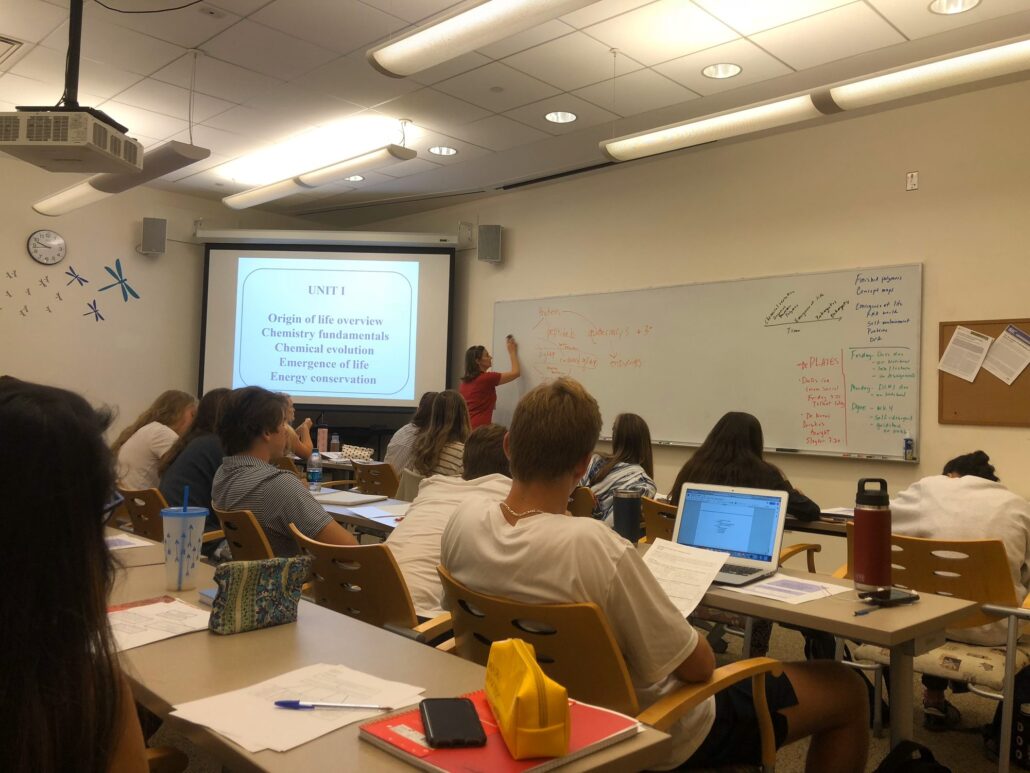
Finally, the strategists collected data on how students were actually carrying out their work, giving both students and faculty a clearer view of where effort was paying off and where it was not.
Because these processes usually stay hidden, they become traps on the path from hard work to high performance. Once they are visible, students can use new tools to convert effort into stronger performance. Many students reported studying less while learning more deeply and earning better grades.
After training as a Peer Learning Strategist, Kristina Diez described her realization:
“I had never considered that the way I was thinking and processing information might not match what my professors expected, and that this misalignment could make a course harder than it needed to be.”
Kristina Diez, Peer Learning Strategist
Seeing academic work clearly let her compare her thinking to her instructors’ expectations and adjust. She wasted less time and found learning more rewarding.
“College is hard. There’s no way around it. We’re trained to help students think on a deeper level so that this kind of thinking becomes second nature. This program helps students adjust and achieve without burning out.”
Nicole Wetoska, Peer Learning Strategist
These insights point to a relationship that even the strongest human relationships cannot replace: the student’s relationship with academic work itself.
What Relationships Enable, and What They Don’t
Denison’s relational culture made this inquiry possible. Because students trusted faculty and staff, they spoke candidly about confusion, frustration, and doubt. Because faculty trusted one another and the administration, they were willing to examine their own practices and ask whether well-intentioned structures were working equitably.
But relationships alone did not provide clarity. Students still lacked visibility into key academic affordances:
- How daily content connects to course learning outcomes
- How the thinking a task requires compares with how they currently think
- The unspoken expectations built into academic work
Well-connected students often picked this up informally, from casual advice, older peers, or prior schooling. Others, particularly students from historically underrepresented backgrounds, described feeling there were “rules” they had never been given.
Even the strongest faculty-student relationship reaches a limit. A professor can encourage, reassure, and advise. A mentor can share strategies and experience. Without a shared framework for what academic work actually demands, the core relationship stays misaligned: students keep working hard, and faculty keep wondering why outcomes remain uneven.
Denison’s next step was to build infrastructure that could carry relationships into this deeper, less visible layer of learning.
Building a Complementary Learning Environment
The Peer Learning Strategist (PLS) program also gave faculty new insight into what students were doing outside class. Many students engaged with course material in ways that extended, duplicated, rehearsed, or even contradicted classroom instruction. What they often needed to do instead was transform the work. Many did not know this was their responsibility, and few had the tools to do it.
As the program shared these findings, many faculty saw that redesigning certain course elements could strengthen student development. They began revising course learning outcomes to signal more clearly how students should think about content, when to shift modes of thinking, and where to make conceptual leaps to broader frameworks.
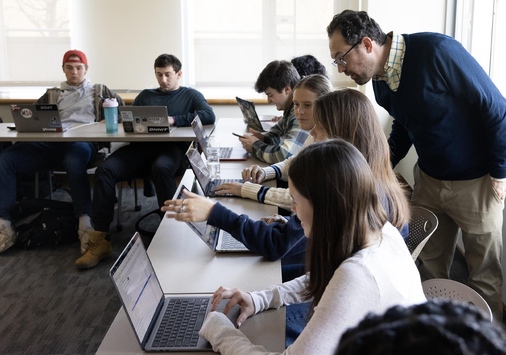
“By revising my course learning outcomes, I was able to connect learning processes throughout the semester. Students were able to anchor their course and laboratory work around central course themes. Students created conceptual bridges as they practiced evaluating the utility of models in chemistry by examining assumptions inherent in the collected data or model. A succinct metacognitive-based outcome made it easier for everyone to link this course objective to practice problems and lab calculations throughout every unit.”
Dr. Annabel Edwards, Faculty, Denison University
Denison did not lower expectations or steer students away from demanding majors. It built a complementary learning environment, one that makes the work of learning more visible and the responsibility for navigating it more shared.
Across the division, the focus shifted from more activity to better-directed activity. Relationships remained central, but now they were connected to a shared language for what rigorous academic work requires. Denison had extended its relationship culture into the space between people and work.
Data Driving Clarity
As these practices took hold, faculty gained something often missing in higher education: visibility into how students actually interact with their work.
Strategists recorded the behaviors they were and were not seeing. Students described how they used learning outcomes and where the process still felt like guesswork. Faculty could see where their assumptions hid expectations and where new clarity opened learning paths.
Over time, the results followed:
- Fewer early withdrawals from key science courses
- More first-generation and underrepresented students continuing into advanced work
- Greater confidence and stronger performance on early exams
- Students studying less, learning more deeply, and earning better grades
- Faculty revising course learning outcomes to make expected thinking clear
“Students who are paired with a Peer Learning Strategist early are more confident on early exams and do better on those exams. We are retaining students, and those students are progressing through science majors beyond the first few introductory courses.”
Dr. Ayana Hinton, Denison University
Students described a new sense of control: knowing what to focus on, how to study, and how to adjust. Several spoke of moving from “guessing what matters” to understanding how to learn in their courses.
What began as an effort to address a specific equity concern became something broader: a way of aligning relationships, expectations, and work.
“This approach harnesses the power of relationships and community, helping all our students translate effort into learning. It has changed how we support our students.”
Adam Weinberg, President, Denison University
Learning That Travels
The impact reached beyond the classroom. Alums who joined the PLS program as first-year students describe carrying its tools into graduate programs, clinical placements, and early careers.
- In a doctoral program: One alum credited those skills with helping her move efficiently through a doctoral program in occupational therapy and prepare for her board exam, especially the ability to work at “deeper levels of learning” when time was scarce.
- On the path to medical school: Another, working as a research associate and nursing assistant while preparing for medical school, valued being able to identify what felt familiar in a new task, what did not, and where to focus next.
The program was not simply support for difficult classes. It cultivated portable habits of mind:
- Noticing how one is thinking
- Matching strategy to task
- Revising when the two fall out of sync
Students were developing a more intentional relationship with their own learning.
Pursuing Enrollment Health
Looking across this work, a broader idea comes into view: Enrollment Health.
Attracts and selects students.
Brings students to campus.
Asks whether they thrive.
Whether teaching, support structures, and informal norms create the conditions for students to turn opportunity into achievement.
“At Denison, we’ve learned that you don’t build a great college by chasing rankings. You build it by getting the conditions right, where relationships, teaching, and support systems all work together so that students can do their best, most demanding work.”
Adam Weinberg, President, Denison University
At Denison, that question is no longer abstract. It is built into how students learn, how faculty design and describe their courses, and how peers support one another.
What Relationships Produce
Many institutions call themselves relationship-driven. Denison’s distinction lies in what its relationships produce.
- Students are supported, and also expected to engage with complex work.
- Faculty are responsive, and also more precise in how they define and assess learning.
- Peers extend those expectations, helping one another turn them into concrete practice.
As this work spreads beyond the natural sciences, the aim stays the same: align culture, curriculum, and support so the experience of learning reflects the institution’s stated ambitions. Graduates who practice this kind of metacognitive work are better prepared to interpret ambiguity, adapt to new demands, and keep learning when the path is not fully marked.
Becoming the Architects of Their Lives
Perhaps that is the larger lesson.
The most important educational relationships are not only those between students and faculty, mentors, or peers. They are also the relationships students build with challenge, uncertainty, complexity, and their own capacity to grow.
At Denison, those relationships are being built deliberately: not simply to keep students enrolled, but to help them navigate difficult intellectual terrain with growing confidence, clarity, and independence.
Students do not become architects of their lives through encouragement, belonging, or opportunity alone. They become architects when they learn to engage complexity, interpret ambiguity, adapt their thinking, and transform effort into understanding.
At Denison, relationships are not the destination of education. They are the foundation students carry into the rest of their lives.
Make the hidden work of learning visible on your campus.
The LearnWell Projects partners with colleges and universities to help every student turn effort into achievement and build Enrollment Health.
Start a conversationSee the Denison story