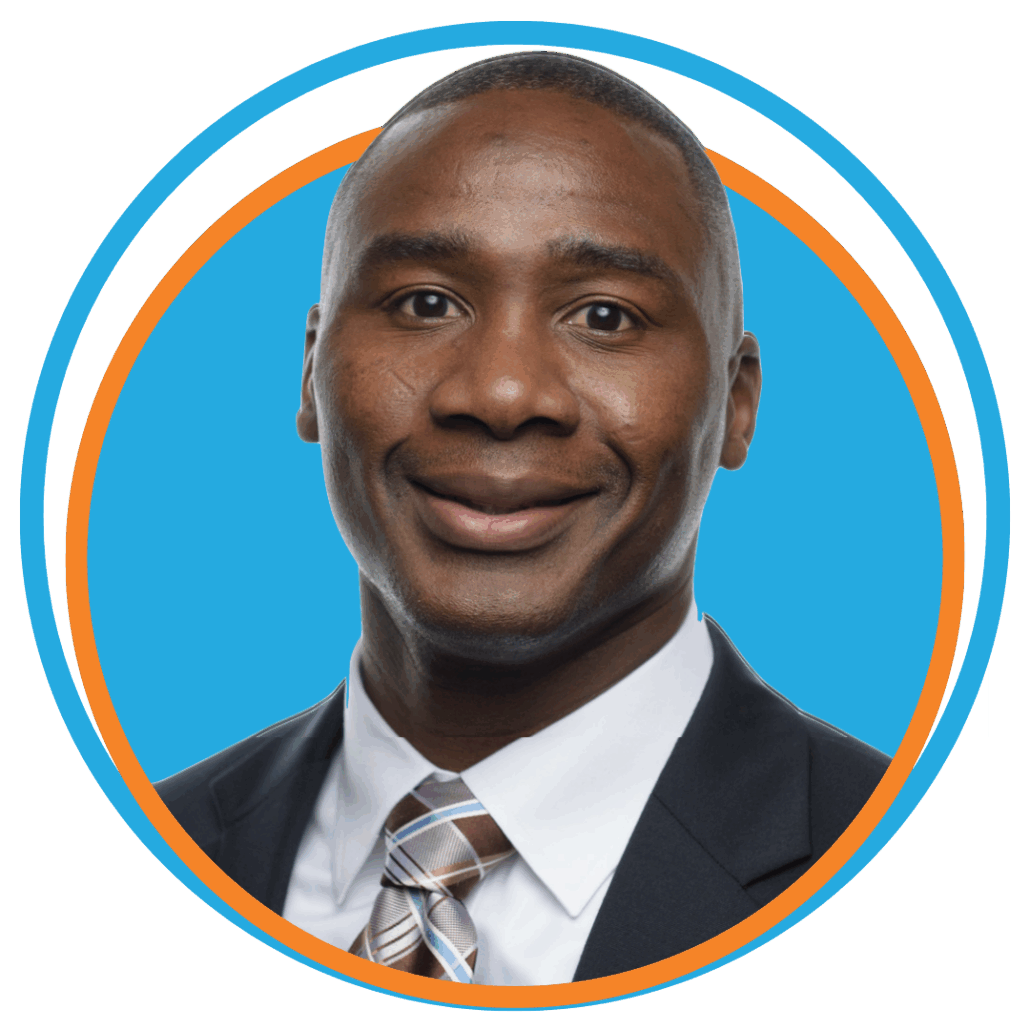
Years after a Quality Enhancement Plan ends, what is still standing? Eric Fournier, who led Samford University’s QEP and is now Director of Educational Development at Washington University in St. Louis, answers in six short clips.
In the summer of 2016, I got a call out of the blue.
I was in Florida on a family trip to Disney when Dr. Katrina Mintz from Samford University asked if I could help with their Quality Enhancement Plan. Their SACS reaffirmation review was coming up. I asked when she wanted to start.
“Right now,” she said.
A few weeks later, she introduced me to the person who would lead the work: Eric Fournier. Eric had been building a teaching and learning center as a one-person shop. Then he walked into a meeting and learned he was the new QEP director. As he told me later, almost everything he knew about the QEP at that point came from our conversations.
Eric is now Director of Educational Development at Washington University in St. Louis. Recently, we reconnected, and I asked him a question I rarely get to ask a client years after the work ends:
What actually stuck?
His answers trace the arc of how this work unfolds on a campus. So I’ve let him tell it, in six short clips.
It starts with a kind of problem every institution has.
Step one: find the real target
That phrase, “problems they can see in their data, feel through their experiences, but cannot fully define,” describes almost every campus I walk onto.
Faculty sense that something is off. Students are working hard, but the work they bring to class doesn’t add up. Everyone has a theory. Nobody has a target.
At Samford, the target came from an uncomfortable piece of data.
Step two: give everyone the same language
A target is a start. But it doesn’t change what happens on a Tuesday afternoon when a struggling student sits across from a professor and says, “I’m studying so hard.”
Most faculty are deeply but narrowly trained in their fields. They were never taught to see the hidden work of learning, the work students do away from class that either builds toward the assessment or quietly misses it. So I sat in study areas and the learning center, watched how students worked, and gave faculty a way to ask about it.
Here’s how Eric remembers it.
“Studying hard” is effort. It isn’t yet a strategy. Once faculty can ask what studying hard looks like, the hidden work becomes visible, and fixable.
Step three: build something that outlasts the consultant
Every consultant can point to good outcomes during an engagement. The harder test is what’s still standing after the consultant leaves.
So I asked Eric about the culture.
That’s the part I’m proudest of. Years later, at a different institution, “initiating and sustaining collegial conversations about teaching and learning” is one of the five goals of WashU’s Center for Teaching and Learning, where Eric serves as Director of Educational Development.
That isn’t a project that ended. It’s a practice that traveled.
A word to learning center leaders
Most of you who read this blog lead learning centers. So I want to pause on a point I made to Eric, because it is the most underused asset on most campuses.
Your tutors, coaches and learning strategists sit with students at the exact moment they’re trying to turn what happened in class into learning. That’s Trench Data™. When a learning center captures it, and shares it with faculty and teaching centers, it stops being a support service on the edge of campus. It becomes the institution’s clearest window into how learning actually happens.
What comes next
Like many institutions, WashU is now weighing whether to bring its tutoring and student support under one roof. Done well, consolidation clarifies everyone’s contribution. Done poorly, it sends a campus back to the drawing board every few years.
As we wrapped up, Eric said this.
Let’s talk about what your data can’t define yet
If you’re reading this, there’s a good chance you can feel a problem on your campus that you can’t quite name.
Maybe hardworking students aren’t getting the results their effort should earn. Maybe students who arrive set on STEM are being rerouted out of the majors they came for. Maybe you’re weighing a consolidation and want to get the design right the first time. Or maybe your learning center is sitting on Trench Data™ that nobody has asked for yet.
That’s the work I do: making academic work more visible, manageable and effective, so that faculty, learning centers and students can see the same picture and act on it.
I’d love to hear what you’re seeing. Send me a note at learning@thelearnwellprojects.com and tell me a little about your campus and the challenge in front of you. I read every message, and I’ll reply personally.
And if you’d like the whole story, here is my full conversation with Eric. Use the chapters to jump to the parts that matter most to you.
A special thank you to Eric Fournier for his time, his candor, and his willingness to share this work so openly. Eric, the faculty conversations you started at Samford are still paying off, and I’m grateful you let me tell that story with you. If you’d like to follow his work, connect with Eric on LinkedIn.